
Ottawa is where the heat pump question gets a different answer from the rest of southern Ontario. In Hamilton or London the winter rarely goes past minus 15 and a cold-climate heat pump carries almost the whole season. In Ottawa the January mean is near minus 10, the cold snaps reach minus 30, and the season runs seven months. A heat pump still works here, and for most of those months it is the cheaper source of heat. But the coldest weeks are real, and they are why the answer for most Ottawa homes with gas is not either, but both.
How each one makes heat
A gas furnace burns natural gas or propane and the blower pushes the heat through the ducts. A 96 percent AFUE furnace turns 96 cents of each gas dollar into heat in the house. It only heats; summer cooling is a separate appliance.
A heat pump moves heat rather than making it. In winter it pulls heat from the outdoor air, even air well below freezing, and carries it indoors through a refrigerant loop; in summer it reverses and is the air conditioner. Because it moves heat, it delivers two to four units of heat for every unit of electricity it uses. That ratio falls as the outdoor temperature falls, and how far it falls is the whole Ottawa question.
What changes at minus 20
A cold-climate heat pump is built to keep most of its rated capacity down to about minus 15 and to keep heating, at reduced output, to minus 25 or minus 30. Two things happen as the temperature drops: the unit delivers less heat per hour, and it uses more electricity for each unit of heat it delivers. At the same time the house is losing heat faster. Somewhere on a cold night the two lines cross, the heat pump can no longer carry the house alone, and something else has to supply the difference: electric resistance strips, which cost about three times as much per unit of heat, or a gas furnace.
Ottawa spends a meaningful number of hours a winter below minus 15. That is the difference from southern Ontario, and it is why a heat pump alone, sized to carry an Ottawa house through a minus 30 night, ends up oversized for the other 95 percent of the season.
Running cost at three temperatures
With current Enbridge gas rates and Ottawa electricity rates, the picture by temperature is roughly this.
- Plus 5, a typical October or April day: the heat pump returns three or more units of heat per unit of electricity and is clearly cheaper than gas.
- Minus 10, a normal January day: close to even. Which one wins depends on the rates that month and on the specific unit.
- Minus 25, a cold snap: the furnace is cheaper, and the heat pump may not keep up on its own.
A hybrid system takes the cheaper fuel at every temperature. The changeover point is set at installation from the rates and the unit's performance curve, and moved from the thermostat when the rates change.
Why hybrid is the Ottawa default
For a house with a gas furnace already in the basement, adding a cold-climate heat pump on the same blower gives you: the heat pump for the long shoulder seasons and ordinary winter days, the furnace for the deep cold, air conditioning from the same outdoor unit, and the heat pump rebates, which a furnace alone does not claim. It is also the lowest-risk way to try a heat pump in this climate, because the furnace is the backup and no electric strips are needed. If the furnace is under 12 years old, a hybrid is usually the right move when the air conditioner fails.
When a heat pump alone makes sense
- A home on propane in Manotick, North Gower or the rural fringe. Propane is expensive heat, and a cold-climate heat pump with electric backup beats it on cost most winters.
- A home with no gas service at all, heated by electric baseboards. The heat pump cuts the bill by half or more.
- A well-insulated newer house, or one that has had its envelope upgraded through an energy audit, where the heat loss on the coldest night is small enough for a right-sized unit to carry.
- A house without ducts, a century home in Centretown or Sandy Hill, where ductless heads can heat the main rooms and the old radiators or baseboards cover the cold snaps.
The ratings that matter
- HSPF2 is the heating efficiency over a season; higher is better, and 8 or above is a good cold-climate number.
- SEER2 is the cooling efficiency; 16 or above is the current standard.
- Rated capacity at minus 15 and at minus 25. Any unit sold for Ottawa should publish both. If a quote does not include them, ask.
- AFUE for the furnace half of a hybrid: 96 percent or better.
Comfort, lifespan and the question to settle first
A heat pump delivers long, low, steady heat; the air from the registers is warm rather than hot, and on a cold night the unit runs for hours or continuously. That is the design, not a fault. The outdoor unit makes a low hum and, in winter, goes through defrost cycles that sound different; it should sit where that will not bother a bedroom. A furnace lasts 15 to 20 years with annual service; a heat pump 12 to 15, because it works all year. Both want a yearly service, and a hybrid gets both done in one visit.
Before any of that is sized, there is one question to settle: is the house losing heat faster than it needs to? An energy audit and some attic insulation can shrink the heat pump a house needs by a full size and pull the crossover temperature down several degrees. Ask about it before sizing anything. What the equipment costs installed is in what a cold-climate heat pump costs in Ottawa, and the programs that help pay are in the rebates guide. For both sets of numbers for your house, ask for a heat pump quote; if the furnace side is the question, a furnace installation quote is done on the same visit.
Prepared by the 343 HVAC technical team as general guidance for homeowners. It is not a diagnosis of the equipment in your house. Call to talk through your own heating system.
Services this guide relates to
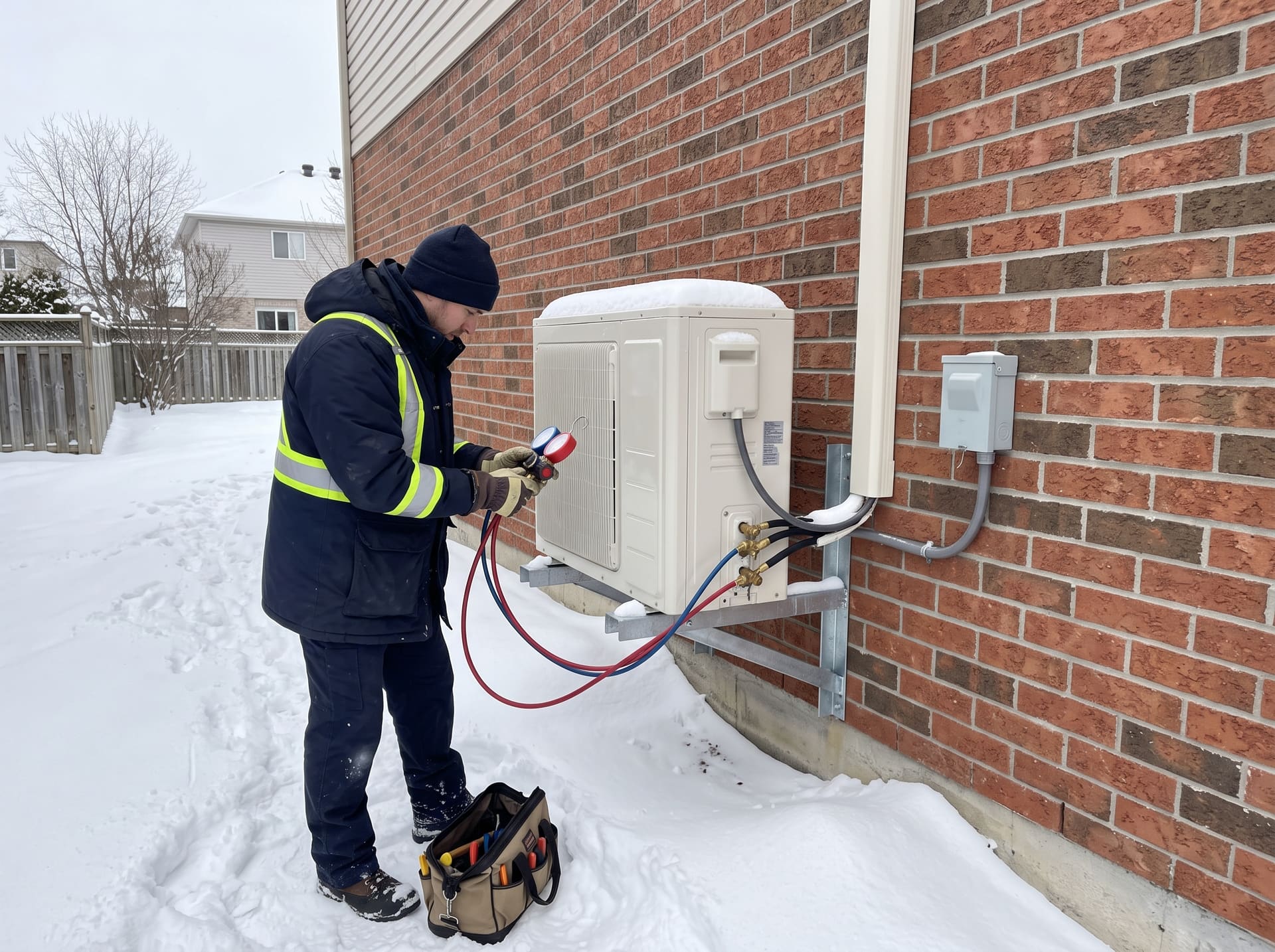
Heat pumps
Heat Pumps & Hybrid Systems
A cold-climate heat pump can carry an Ottawa house through most of the winter and cool it through a humid July. Paired with a gas furnace as a hybrid system, it uses whichever fuel is cheaper on a given day and hands over to the furnace when the mercury really drops. We install, service and repair ducted and ductless heat pumps in Ottawa, Kanata, Barrhaven and the surrounding communities.
Learn more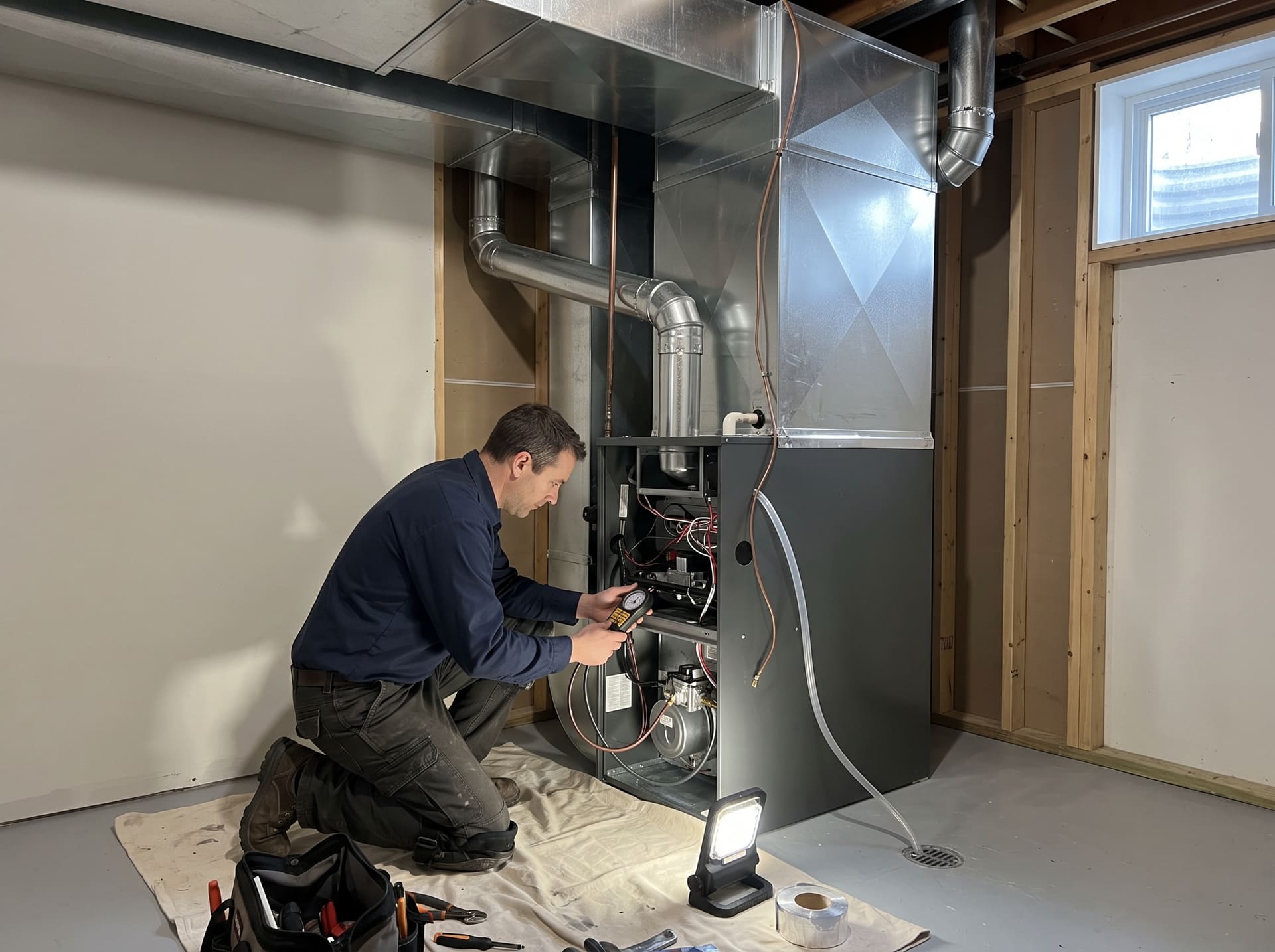
Installation
Furnace Installation & Replacement
Ottawa is among the coldest capitals in the world, and between November and April the furnace is the one appliance a house cannot be without. We replace worn-out furnaces and fit new ones that are measured to the home rather than copied from the old nameplate, across Ottawa, Kanata, Nepean, Orléans and the surrounding communities.
Learn more


